
Hero Card 295, Card Pack 25 [pending]
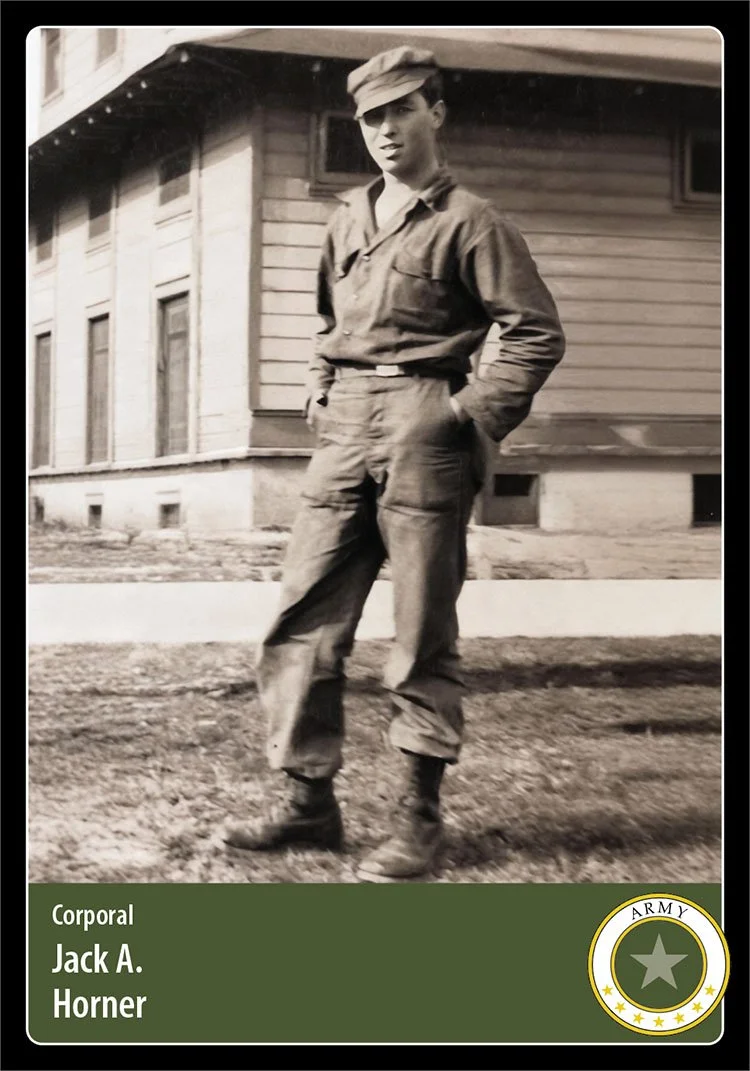
Photo (digitally enhanced) provided by the family.
Hometown: Dandridge, TN
Branch: U.S. Army
Unit: Company L, 3rd Battalion, 23rd Infantry Regiment, 2nd Infantry Division
Military Honors: Purple Heart
Date of Sacrifice: September 19, 1951 - KIA near Mundung-ni, North Korea
Age: 17
Conflict: Korean War, 1950-1953
Jack Horner was born in rural Jefferson County, Tennessee, on November 3, 1933, during the depths of the Great Depression.
His parents, Earl and Ruth (Patterson) Horner, owned a farm where they raised Jersey cows and chickens and grew tobacco. Earl had served in the U.S. Army during World War I and spent part of his service as a Prisoner of War.
Jack was the youngest of five Horner children, with older siblings Opal, Earl (known as “Pete”), Mary Ruth, and Ida Joe. He attended Maury High School, and the family attended Shady Grove Methodist Church near the small town of Dandridge, along the banks of Douglas Lake.
Older brother Pete served in the U.S. Navy during World War II. At age 17, Jack enlisted in the United States Army on December 5, 1950, as the U.S. entered a new conflict in Korea.
Because he was not yet 18, Jack’s parents were required to sign a consent form. According to Jack’s niece, Carlyn, his parents did so with the understanding that Jack’s service would remain in the U.S.
Horner was sent for infantry training to Camp Breckenridge, near Morganfield, Kentucky.
By April 30, 1951, Horner was assigned to Company L, 3rd Battalion, 23rd Infantry Regiment, 2nd Infantry Division, and shipped out to Korea.
The Defense POW/MIA Accounting Agency describes what CPL Horner’s unit faced five months later, in early autumn, 1951:
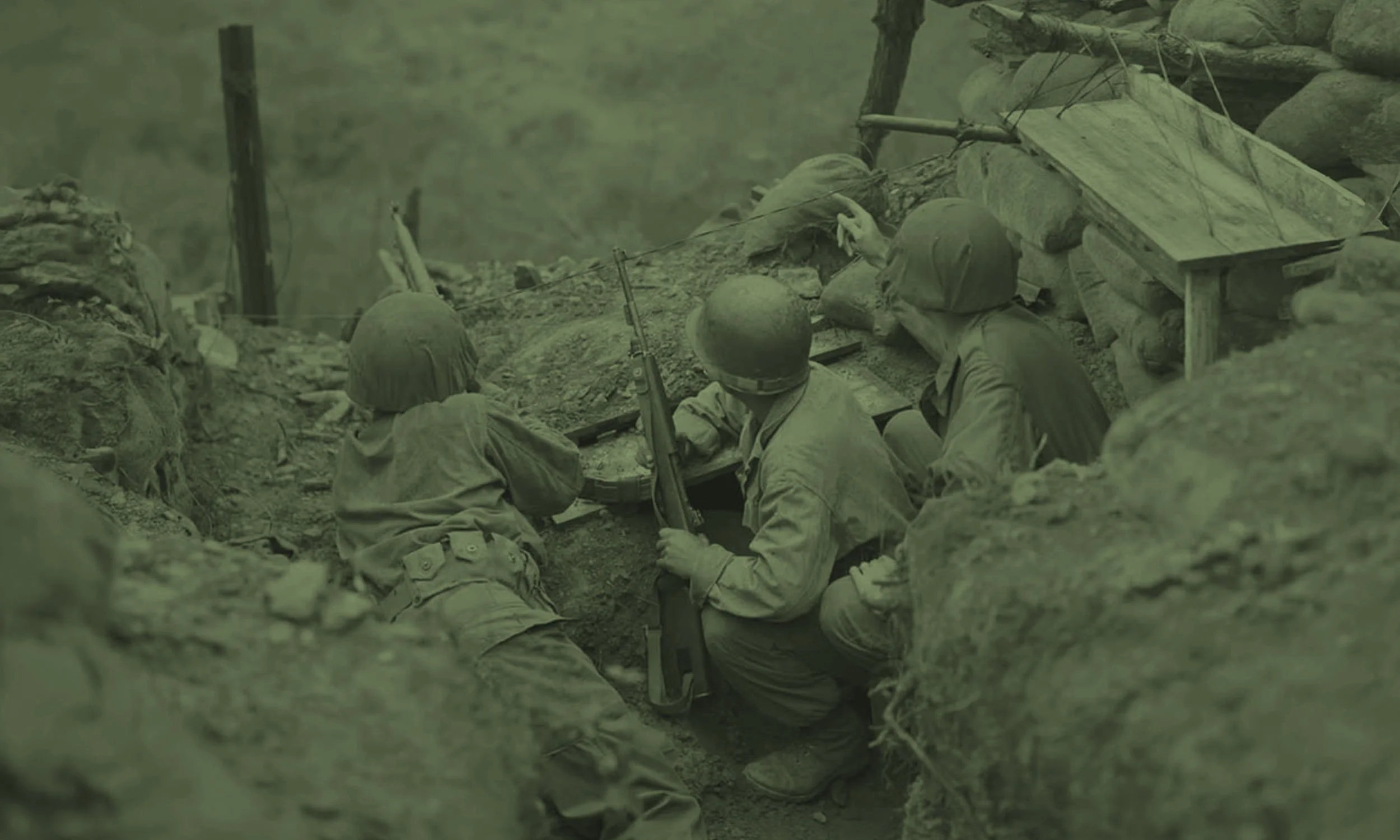
On September 13, 1951, elements of the U.S. 2nd Infantry Division began the battle for Heartbreak Ridge, a narrow stretch of mountainous terrain overlooking the Mundung-ni and Satae-ri Valleys. These valleys contained important roads and streambeds accessible by enemy tanks and supply trucks, with a system of bunkers guarding the avenues of approach.
By September 19, the 3rd Battalion of the 2nd Division’s 23rd Infantry Regiment held positions on Hill 851; however, the men faced a heavy and near-suicidal attack by enemy forces. Defensive fire repelled these attacks for several hours, but the persistent advance soon necessitated that the forward American units fall back and consolidate their lines.
Troops moved under the cover of friendly fire and rearguard actions, but the withdrawal was dangerous and caused the 3rd Battalion to suffer several casualties.
After the fighting at Hill 851 on September 19, 1951, CPL Jack Horner was reported Missing in Action. No one reported seeing him fall during the battle. His name never appeared on shared Prisoner of War reports.
The area surrounding Hill 851 was later declared a Demilitarized Zone (DMZ)—a buffer strip separating North and South Korea—as part of an Armistice Agreement on July 27, 1953. The agreement by all warring parties to stay out of the DMZ makes it nearly impossible to send recovery missions for fallen U.S. servicemembers.
Two years after going missing, CPL Horner’s status was changed to “presumed dead” by the War Department on December 31, 1953. He was 17 years old when he went missing on Heartbreak Ridge.
CPL Jack A. Hill is memorialized at Court 6 in the “Courts of the Missing” at the National Memorial Cemetery of the Pacific in Honolulu, Hawaii. His name is engraved on the Wall of Remembrance at the Korean War Veterans Memorial, on the National Mall in Washington, D.C. (Panel 57).

Sources
Card photo and story details contributed by Mrs. Carolyn Carden, CPL Horner’s niece.
Defense POW/MIA Accounting Agency: Cpl. Jack Alexander Horner
Dandridge Banner: Memorial Services for Cpl. Jack A. Horner
Together We Served: Korean War – the Battle Of Heartbreak Ridge
HonorStates.org: Jack A. Horner
East Tennessee Veterans Memorial Association: Jack A. Horner
Memorial: Find a Grave

